

Key factors affecting the efficient laying performance of laying hens
Release time:
Apr 16,2022
In recent years, foreign advanced breeding companies have put forward the high-efficiency production target of "laying hens produce 500 eggs in 700 days", which means that the egg production rate of more than 90% is maintained for more than 13 months. The breeding cycle of laying hens in our country is generally about 500 days. When the market is good, the breeding cycle will be extended accordingly. However, the maintenance time of more than 90% egg production rate is generally 8-10 months. Some excellent chicken farms can exceed 10 months, but many chicken farms can reach less than 8 months.
There are many factors that affect the efficient laying performance of laying hens, such as the quality of chicken seedlings, provenance, chicken house conditions, environmental control, feeding management, immune procedures and feed nutrition.On the whole, the standard and uniformity of body weight of laying hens in the brooding and breeding stages are the first factors that affect the performance of laying hens in the whole laying cycle.The new edition of the Highland Brown Feeding Management Manual (2022 Edition) specifically emphasizes that "chickens with poor body weight or uniformity may have difficulty achieving good peak egg production, egg production continuity, or other performance-related problems. It is important to identify these problems early and take corrective measures". Moreover, the new edition of the Highland Brown Feeding Management Manual has also elaborated and emphasized the importance of weight and uniformity many times, which is very important for our daily refined feeding management, such:
(1) "During the 1-30 week age period, monitor body weight once a week. The weight of the seventh age chicks should be 2 times of the weight of the house, and the weight of the 5 week old chicks should be 10 times of the weight of the house. It is often important to ensure that the chicken is getting the best possible growth, 6 weeks, 12 weeks, 24 weeks and 30 weeks of weight compliance.
(2) "The weight reaching the standard is an important basis for the replacement, not the age of the day, and the replacement according to the age of the second may lead to poor uniformity or overweight of the flock. If the weight of the chicken is lower than the standard weight, the chicken should continue to be fed with the diet of the nutrient concentration until the standard weight is reached";
(3) "If possible, set the standard weight of the reserve chickens in the brooding and breeding period as the upper limit of the standard, but it needs to be noted that the weight should not exceed 5% of the upper limit. The death rate of fatty liver syndrome in obese chickens is even higher". It should be noted that the upper weight limit given in the new version of the manual has been improved compared with the 2018 version. For example, the upper limit of body weight for the new version is 80g for one week old and 72g for the 2018 version, an increase of 11%. The upper limit of body weight for the new version is 220g for the 3-week-old version and 196g for the 2018 version, an increase of 12%. The upper limit of body weight for the new version is 420g for the 5-week-old version and 371g for the 2018 version, an increase of 13%. The weight range of the new 17-week-old version is 1485-1590g, and that of the 2018 version is 1397-1483g. The upper limit value is increased by 7%, which is equivalent to the target weight of the new recommend 17-week-old version not exceeding 12%(7% + 5%) of the upper limit value of the 2018 version. Before the publication of the new edition of the manual, our technical teacher generally suggested that customers should control the opening weight of bred chickens to 8 ~ 10% of the upper limit standard of the 2018 edition, which is consistent with the suggestions given in the new edition of the manual.
(4) "Before the start of production, the uniformity of the flock should reach 85%. In the breeding stage, only when the recommend weight and good uniformity (>85%) are reached can the feeding be changed. If the weight is uneven or the uniformity is poor, the feeding needs to be delayed";
In the nutritional recommendations for brooding and breeding periods given in the management manual, the 0-17-week-old laying hens were divided into 5 feeding stages: 0-3, 4-6, 7-12, 13-15 and 16-17 weeks.
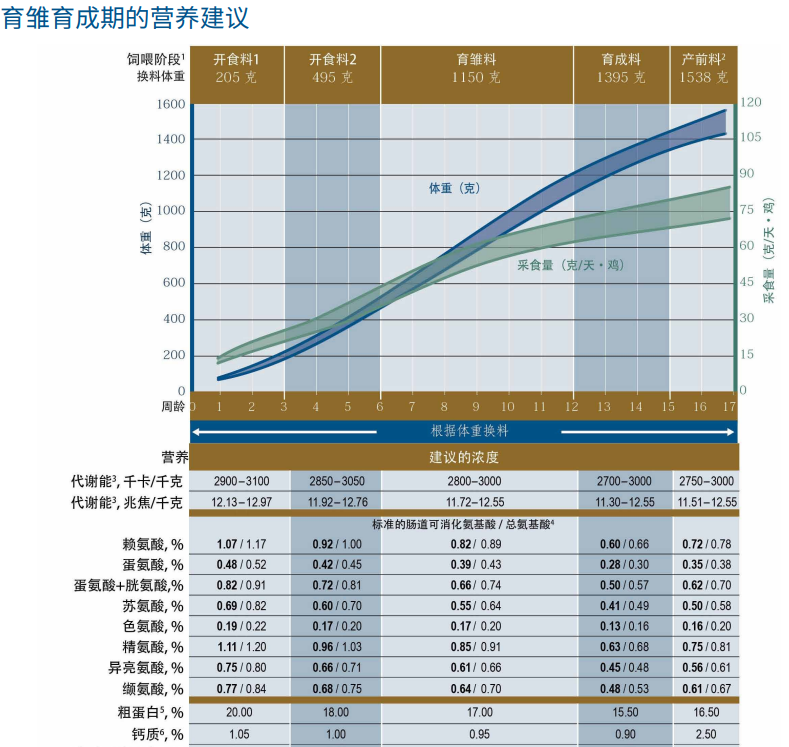
However, the basis for changing materials at different stages is not based on age of weeks, but on the compliance of body weight and uniformity. The requirements of different nutrients for brooding and brooding chickens in different feeding stages are very different. Therefore, the feed formula structure of these five stages is also very different, especially the amount of corn, soybean meal, fiber raw materials and stone powder. The new edition of the Highland Brown Feeding Management Manual gives a detailed description of the feed characteristics of the 5 stages of brooding and brooding:
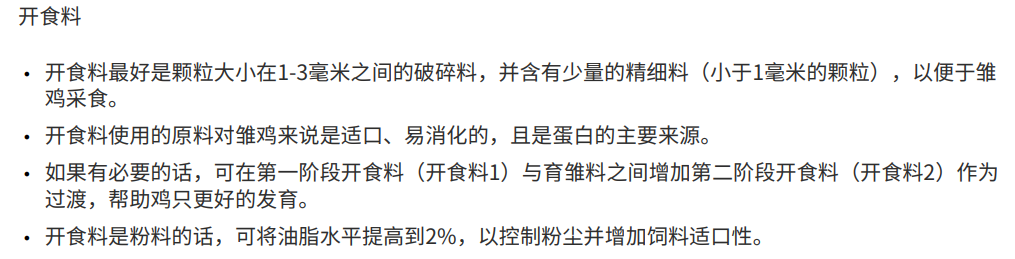
0-3 weeks is the key stage of the development of the digestive system and immune system of chicks, and it is also the stage with the highest requirements for the level and quality of feed nutrition. It is not recommended to use self-ingredients at this stage. Self-ingredients are difficult to meet the requirements in raw material selection, raw material quality control and nutritional balance. Therefore, it is recommended to use an chi 810 series of high-grade egg chick granules in the 0-3 week stage to break the opening material.
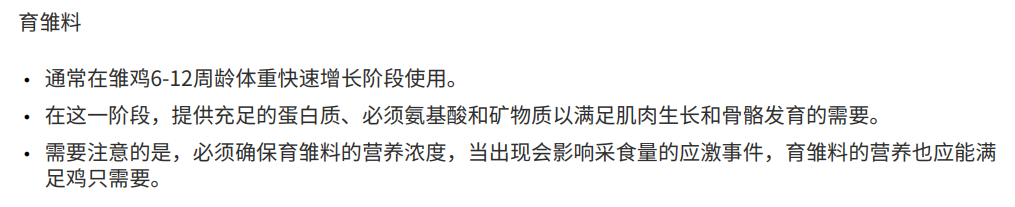
The age of 6-12 weeks is the stage of rapid weight growth of chicks. At this stage, the formula should be dynamically adjusted according to the weight changes of chicks monitored weekly. When the body weight gain is not up to the standard, the nutrient concentration should be increased, and when the body weight gain exceeds the standard, the nutrient concentration should be appropriately reduced, especially at the age of 10-12 weeks.
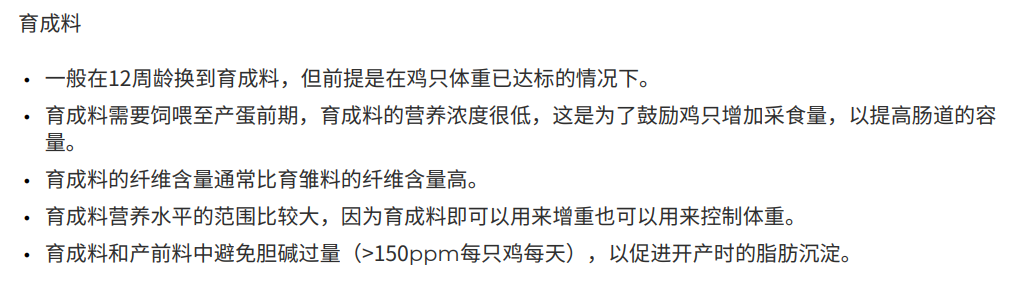
The 12-week-old chicks are replaced with breeding materials after reaching the weight standard. The purpose of the breeding period is to continuously improve the skeleton, physique and body condition of the chicks, improve the gastrointestinal tract capacity, ensure a certain amount of fat deposition in the abdomen, and prevent transitional deposition. Therefore, the formula of breeding materials needs to use appropriate amount of fiber materials, and bran is the most commonly used at present.
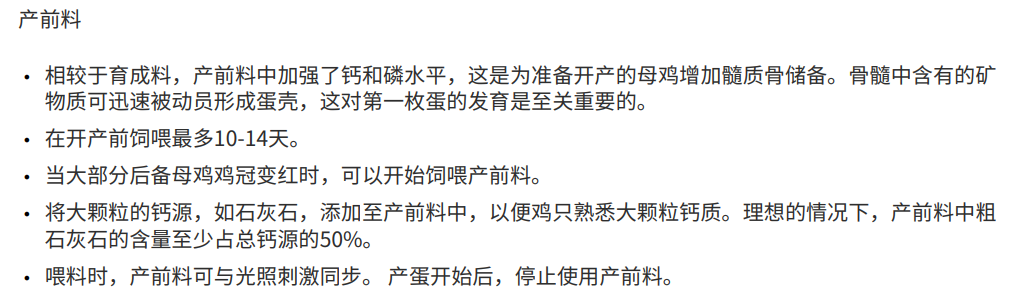
16-17 weeks of age using prenatal feed. At this stage, the medullary bone reserve needs to be increased. The manual recommend that the calcium level of the prenatal material is 2.5%, which means that about 5% of large particle stone powder needs to be added to the formula. The addition amount of stone powder should be increased slowly to prevent diarrhea caused by stress on chickens. We suggest that large particles of stone powder can be added slowly after 12 weeks of age, which can not only meet the demand for increased calcium, but also play a role in exercising the grinding ability of the muscle and stomach.
In order to more intuitively understand the nutritional requirements of these five stages, we can combine the nutritional recommendations recommend the Highland Brown Feeding Management Manual to design recommend formulas for different stages, such:
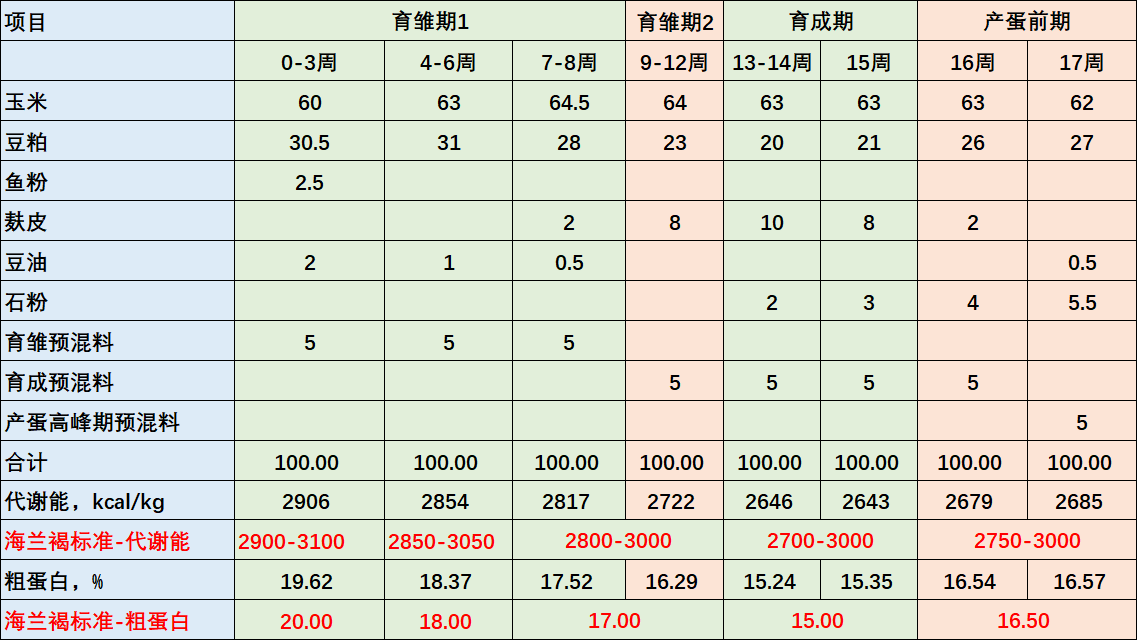
It should be noted that the recommend formula model is not fixed, and needs to be optimized and adjusted according to factors such as chicken breed, growth and development status, raw material characteristics and breeding needs. In addition, even when using 30.5% soybean meal (43% crude protein), 2.5% fish meal (68% crude protein) and 2% soybean oil for 0-3 weeks, the protein, energy level and recommend standard of this formula still have some gap, at this stage, a part of fermented soybean meal (crude protein about 50%), enzymatically hydrolyzed soybean meal (crude protein about 50%) and other protein raw materials with higher protein content, easier digestion and absorption and lower anti-nutritional factor content should be used in the feed formula, and peeled soybean meal (crude protein greater than 46%) should be used instead of common soybean meal to save formula space and meet the addition amount of energy raw materials. Therefore, it is not recommended to use self-batching at this stage of 0-3 weeks.
Another key factor to ensure the efficient performance of laying hens throughout the laying period is the phased feeding during the laying period.The new edition of Hailan Brown Feeding Management Manual provides two kinds of nutrition suggestions during the laying period, namely, the nutrition suggestions under the economic production performance and the nutrition suggestions under the best production performance. The recommended nutrient concentration under the best production performance is higher than that under the economic type, which means that the laying performance of laying hens can be dynamically regulated by adjusting the feed formula according to the market situation, so as to maximize the breeding income. The whole laying period is also divided into 5 feeding stages.
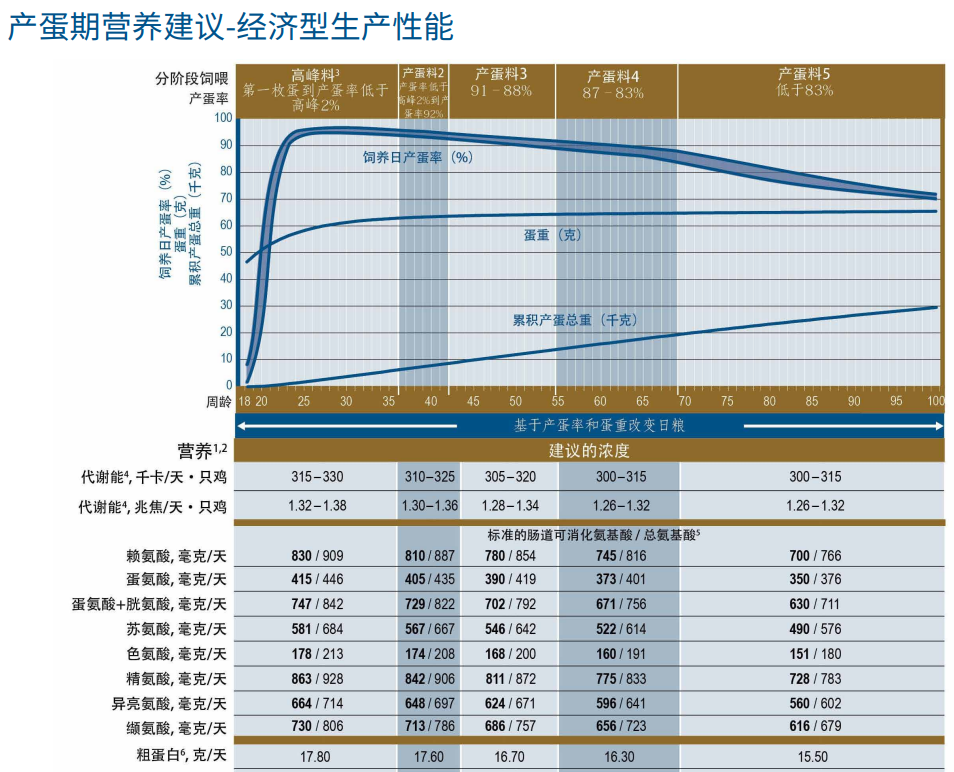
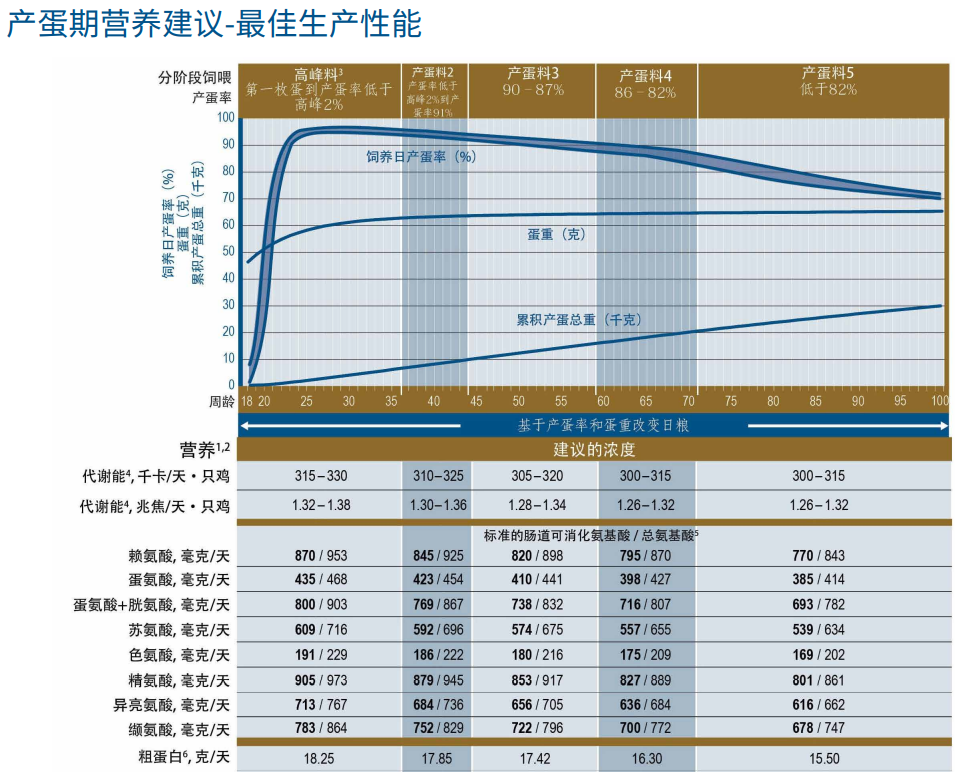
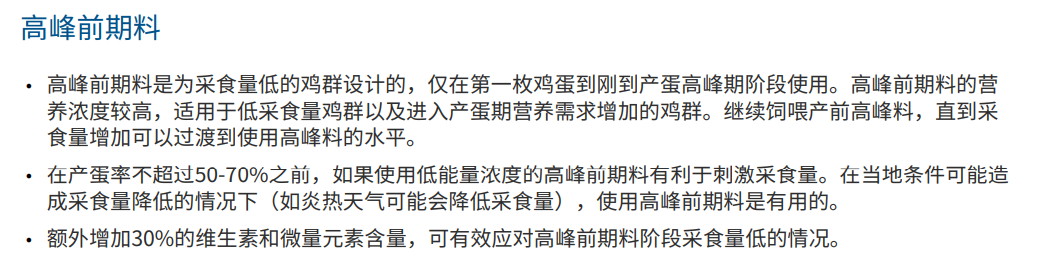
The nutrition and management at the stage of starting production-reaching the peak is an important factor affecting the efficient laying performance of laying hens in the whole period, which is also the most easily overlooked place in actual production. At this time, the egg weight gradually increases, the egg production rate increases rapidly, and the demand for nutrients increases accordingly. However, at this time, the laying hens have not yet reached body maturity (reaching body maturity at 30 weeks), and the laying hens continue to grow and need to consume a certain amount of nutrients to meet body weight gain. However, the feed intake of the laying hens at this stage has not yet reached the maximum. Therefore, the nutrient concentration of the pre-peak feed is higher than the peak feed.
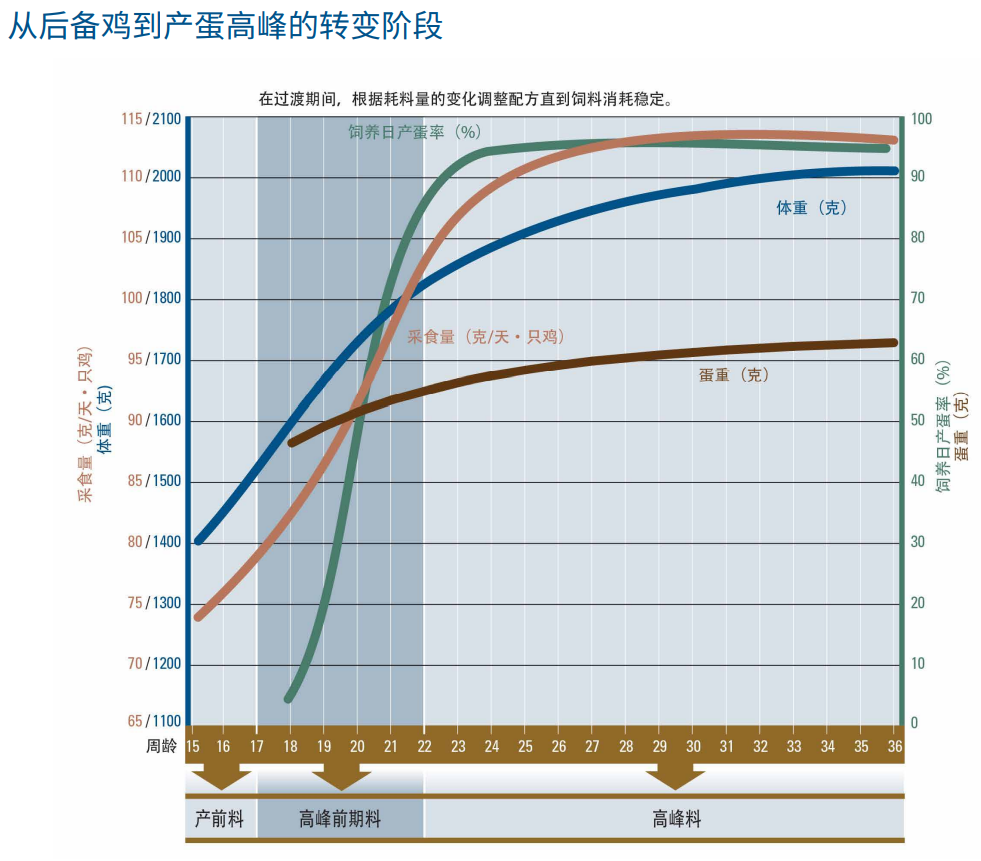
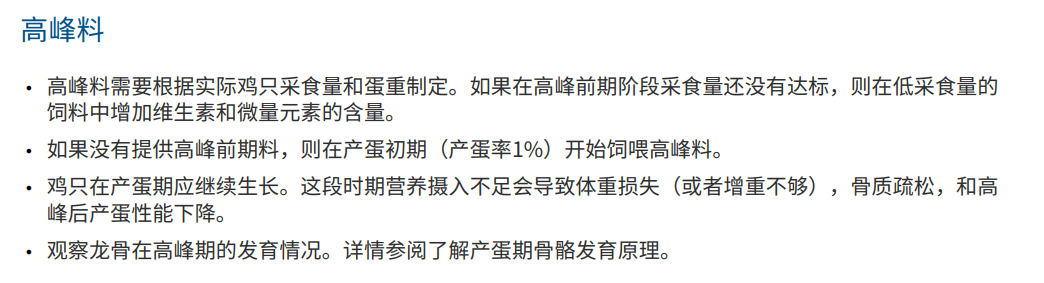
As emphasized in the manual, special attention should be paid to the weight loss of laying hens during the peak period. The maturity time of laying hens given in the new manual is 30 weeks old, which means that laying hens need to consume some nutrients for body weight gain at the stage of reaching the peak of laying -30 weeks old. At the beginning of April, the author visited one of our customers with a million-scale inventory. The teacher in charge of the management of the whole chicken farm showed the author the production performance record form. Among them, the 98% laying rate of a 100000 Hailan ash laying hens has lasted for 7 weeks. The chicken farm management teacher monitored the weight of the laying hens once a week, dynamically adjusted the formula according to the laying performance, feed intake and weight, and set the corresponding high nutrient concentration formula for this high yield laying hens, even so, there is still a slight loss of weight in some weeks of age. If the nutrient concentration is not increased, it will lead to serious weight loss, which will seriously affect the performance of egg production in the later stage. Therefore, it is not only possible to conclude that the nutrient concentration of feed is up to the standard based on the good egg laying performance at the peak, but also to pay attention to the weight change of laying hens behind the high yield.
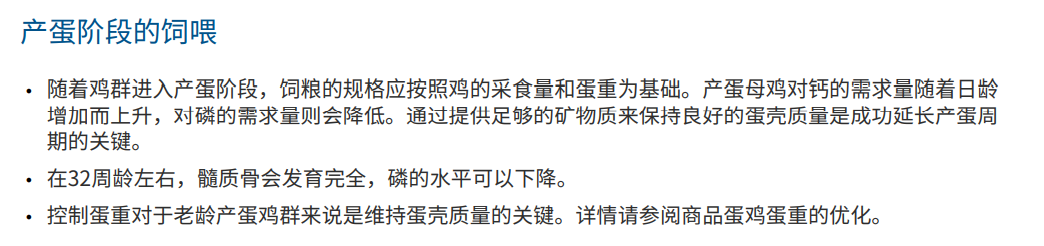
The feeding of the whole laying stage needs to adjust the formula dynamically according to the change of egg laying rate and egg weight. For example, the phosphorus demand of laying hens decreases in the late laying stage, and the calcium phosphorus ratio demand changes, so the formula needs to be adjusted in time. For this reason, Anchi has designed a special premix for the late laying period. Simply put, the late laying period reduces the amount of phosphorus added and strengthens the nutritional technology for liver, fallopian tube and intestinal health and eggshell quality improvement. Therefore, the use of special premix for the late laying period is conducive to maintaining the efficient laying performance of laying hens and improving the eggshell quality in the late laying period. In addition, with the increase of age, egg weight and "egg size" gradually become larger, while the egg laying rate gradually decreases. The decrease in egg laying rate leads to excess nutrients, which further increases the risk of excessive egg weight. Excessive egg weight will cause transitional aging and damage to the oviduct, which will affect the laying performance of laying hens. Therefore, in the late laying period, it is necessary to dynamically adjust the feed formula according to the changes of egg weight, moderately reduce the crude protein level, and control the egg weight within a reasonable range. The new edition of the Highland Brown Feeding Management Manual expresses the egg weight standard of recommend at different weeks of age in the form of a specific single numerical value, no longer in the form of numerical intervals. It is recommended to control the egg weight within 65g/egg before 81 weeks of age and 65g/egg at 82-100 weeks of age, which are all lower than the upper limit of the corresponding week age in the 2018 edition.
In summary, the key factors affecting the efficient egg production of laying hens are the standard of weight and uniformity of laying hens during brooding and brooding, and whether a more scientific phased feeding mode is used throughout the laying period. From the introduction of chicks to the final elimination, most of the feeding management work during the whole breeding period will be carried out around these factors or indicators to meet the standards. Therefore, it is a systematic work to ensure the efficient laying performance of laying hens.
More content
A
A
A
A
A
ANCHEE GROUP
TelPhone: 86-531-88771588
Fax: 86-531-88771898
E-mail: ac@anchee.com
Office address: Floor 25, Building 5, Lushang Guoao City, Lixia District, Jinan City, Shandong Province