

Effect of Moldy Corn on Production Performance of Laying Hens
Release time:
May 22,2023
Recently, the American Poultry Science (Poultry Science) published an article on the impact of moldy corn on the production performance of laying hens. This article will translate and summarize some of the original text to provide guidance for laying hens.
In the experiment, 400-day-old Highland brown laying hens were selected and four treatment groups were set up. The feed formula of the control group was 62.5 corn + 24% soybean meal +8.5 stone powder + 5% premix. The test group replaced the normal corn in the control group feed with 20%, 40% and 60% moldy corn respectively. The test period is 60 days.
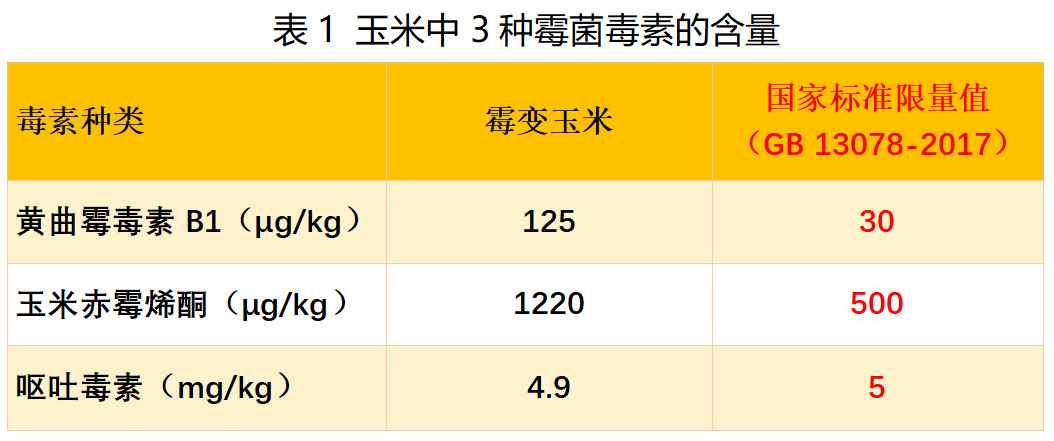
The content of three mycotoxins in moldy corn is shown in Table 1. The content of aflatoxin B1 and zearalenone exceeds the national standard limit value, and the content of vomitoxin is close to the national standard limit value.
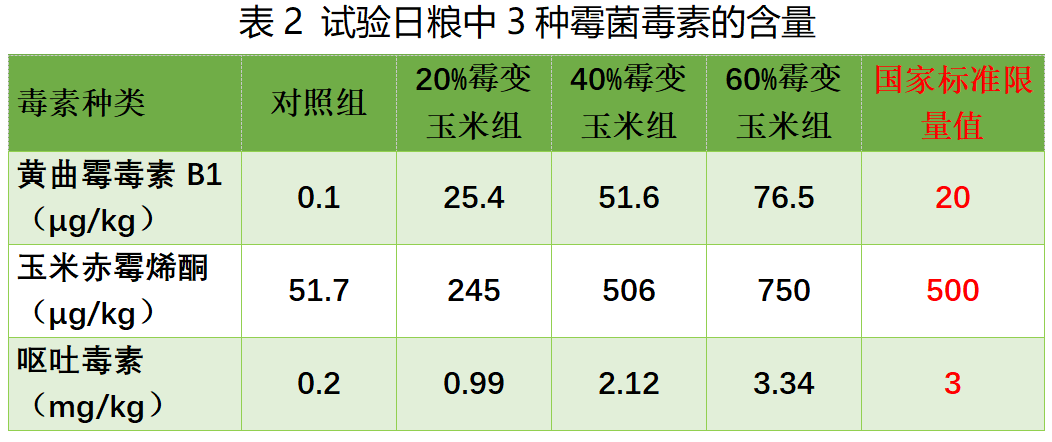
The mycotoxin content in the feed of each treatment group is shown in Table 2. The content of three toxins in the feed of the control group is far lower than the national standard limit value. The aflatoxin B1 in the feed of the 20% moldy corn group slightly exceeds the national standard limit value, while other toxins do not exceed the standard. The aflatoxin B1 and zearalenone in the feed of the 40% moldy corn group exceed the national standard limit value, the contents of 3 kinds of toxins in 60% moldy corn group all exceeded the national standard limit value.
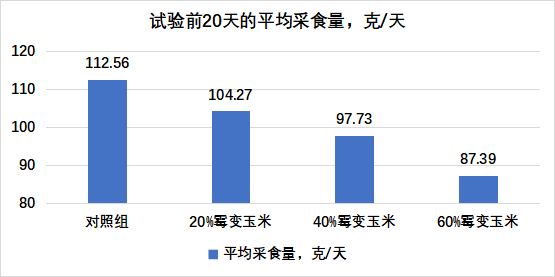
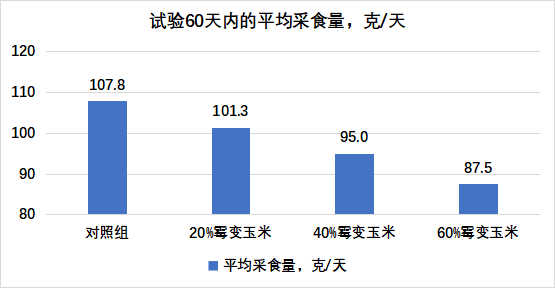
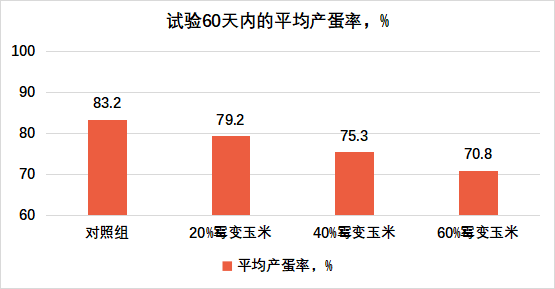
It can be found from the following figure that feeding moldy corn has a great impact on the production performance of laying hens and is very rapid. The feed intake and egg production rate of laying hens began to decrease significantly 20 days before feeding moldy corn. Even if only aflatoxin B1 in the feed of 20% moldy corn group slightly exceeded the national standard limit value, the production performance of laying hens would be significantly reduced.

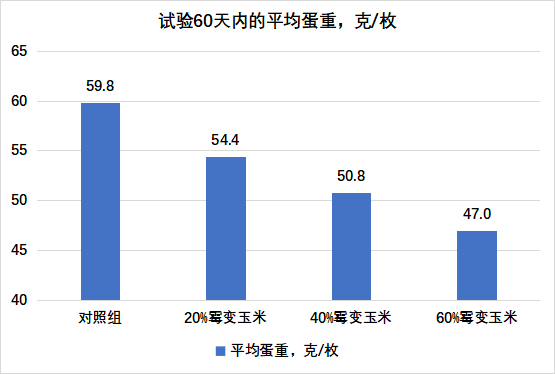
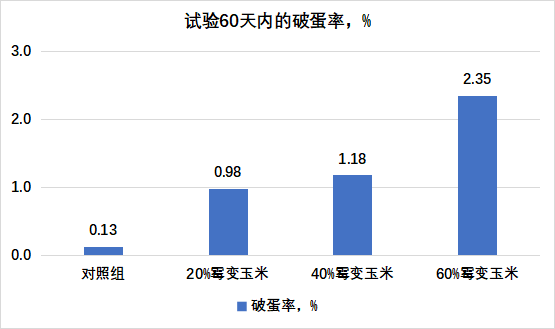
During the whole test period of 60 days, feeding moldy corn significantly reduced the feed intake, egg laying rate and egg weight of laying hens, and significantly increased the feed-egg ratio, egg breaking rate and dead panning rate. With the increase of the feeding amount of moldy corn, the production performance of laying hens decreased more. In addition, feeding moldy corn also reduced the antioxidant capacity of laying hens, increased immunosuppression, and impaired liver function and metabolism.
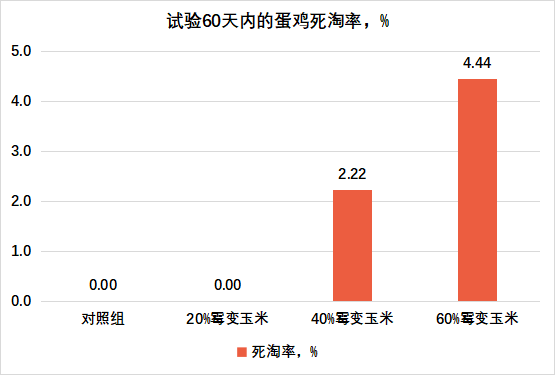
In summary, feeding moldy corn will significantly reduce the feed intake and laying performance of laying hens, and also damage the antioxidant capacity, immune function and liver metabolism of laying hens. Even if the mycotoxin content is slightly lower than or slightly more than the national standard limit value of feed, will quickly reduce the production performance of laying hens. Therefore, it is recommended that farms develop more stringent than national standards for corn acceptance standards to improve the quality of corn. Regular use of Anchi Institute of Animal Nutrition research and development of high-efficiency mildew removal products-mold Anjing. The main components of mianjing are imported Saccharomyces cerevisiae cell wall. β-D-glucan and mannooligosaccharides in yeast cell wall can efficiently adsorb zearalenone and vomitoxin in feed, natural oblique zeolite powder can efficiently adsorb aflatoxin B1, and enzymes produced by Bacillus subtilis metabolism can degrade some mycotoxins. Multiple adsorption and biodegradation can greatly reduce the damage caused by mycotoxins to laying hens.
文献题目:Effects of moldy corn on the performance, antioxidant capacity, immune function, metabolism and residues of mycotoxins in eggs, muscle, and edible viscera of laying hens
Literature link: https://doi.org/10.1016/j.psj. 2023.102502
More content
A
A
A
A
A
ANCHEE GROUP
TelPhone: 86-531-88771588
Fax: 86-531-88771898
E-mail: ac@anchee.com
Office address: Floor 25, Building 5, Lushang Guoao City, Lixia District, Jinan City, Shandong Province