

Effects of different feeding densities on production performance and feather coverage of laying hens
Release time:
Dec 23,2023
Feeding density is one of the important factors affecting the production performance of laying hens, this paper selects two international academic journal articles, summarizes the translation of the original part of the content, expounds the effect of different feeding density on the production performance and feather coverage of laying hens, and provides technical reference for egg breeding production.
Test I
Test Design
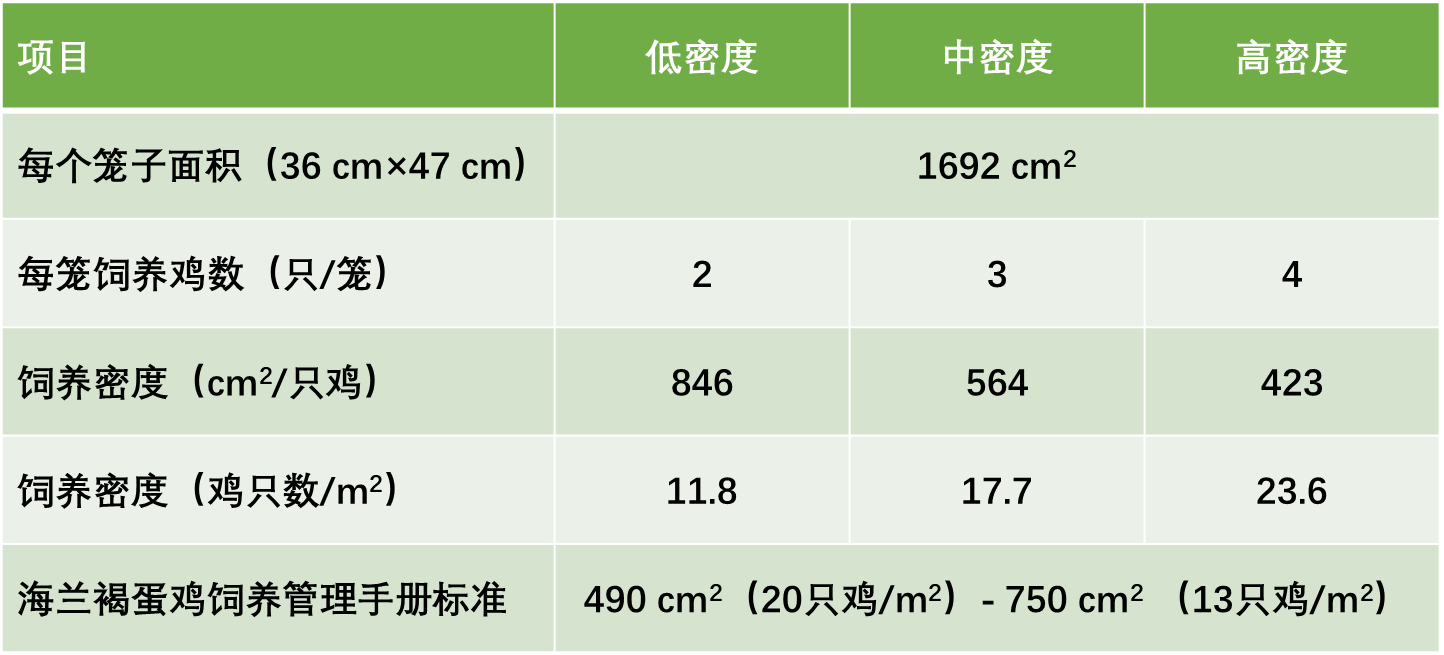
In the experiment, 45-week-old Hailan brown laying hens and Jinghong laying hens with similar body weight were selected, and three different feeding density treatment groups were set up. The specific data are shown in the table below. The test period was 8 weeks (45-52 weeks of age).
Test results
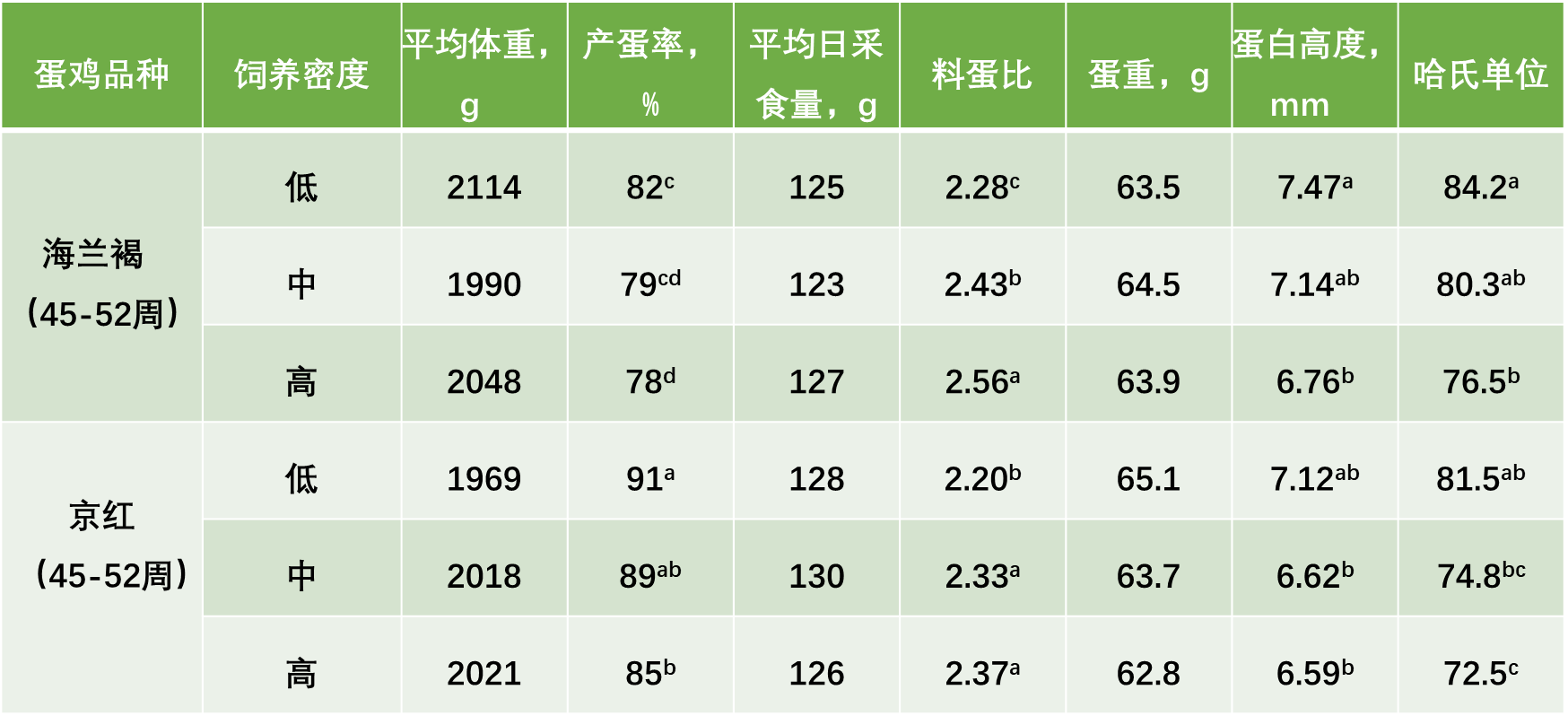
As can be seen from the table below, reducing the feeding density significantly improved the laying rate of laying hens, significantly reduced the feed-egg ratio of laying hens, and significantly improved the quality of eggs.
Test II
Test Design
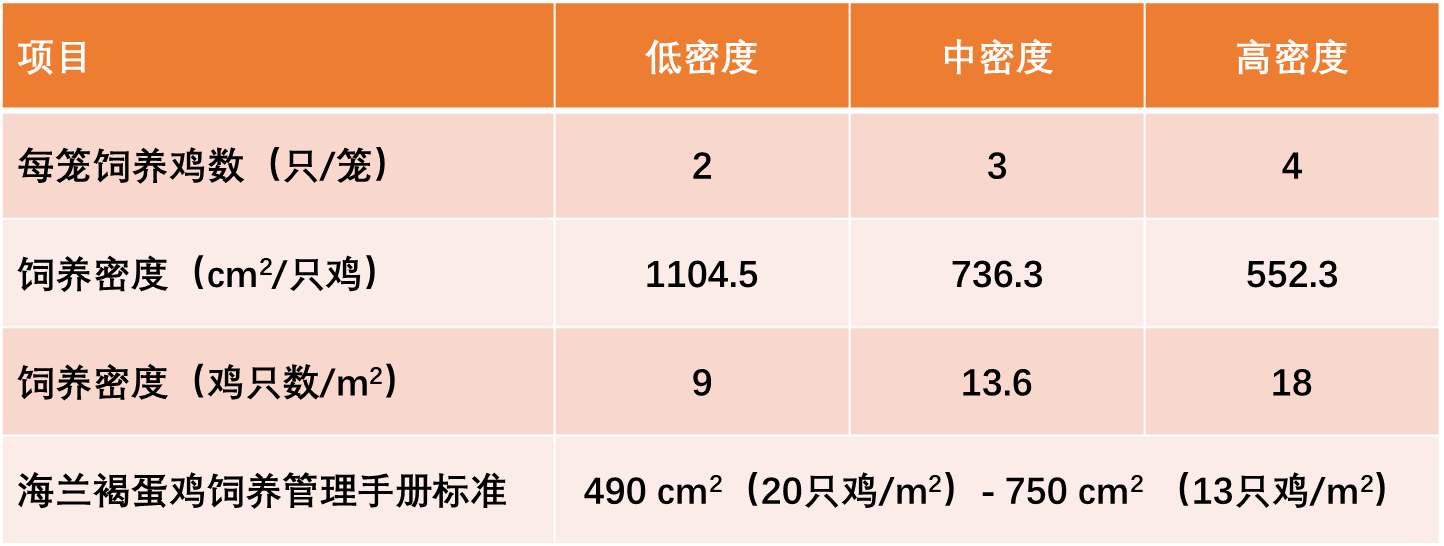
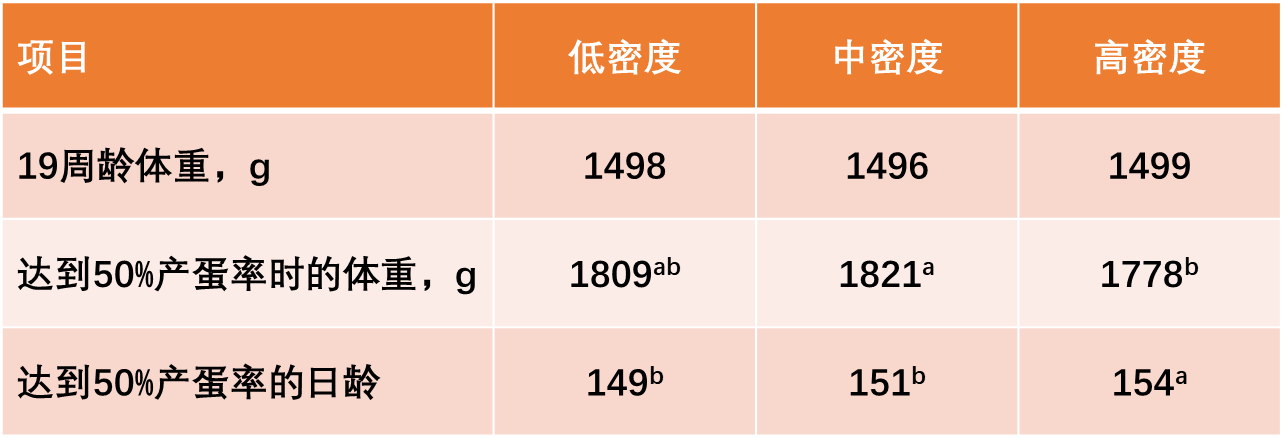
In the experiment, 19-week-old Roman brown laying hens with similar body weight were selected, and three different feeding density treatment groups were set up, such as low, medium and high. The specific data are shown in the table below. The trial period is 20-40 weeks old.
Test results
From the following table, it can be seen that increasing the feeding density significantly reduces the sexual maturity weight (the weight when the egg laying rate reaches 50%) and significantly prolongs the sexual maturity age (the age when the egg laying rate reaches 50%).
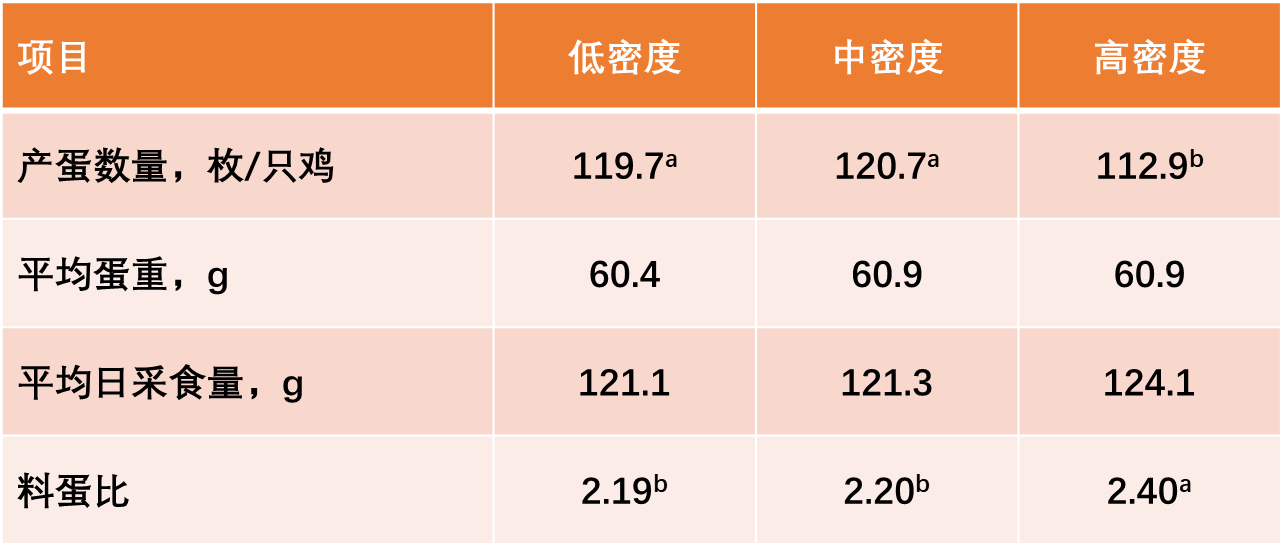
It can be seen from the table below that reducing the feeding density can significantly improve the laying rate of 20-40 week-old laying hens and significantly reduce the feed-egg ratio of 20-40 week-old laying hens.
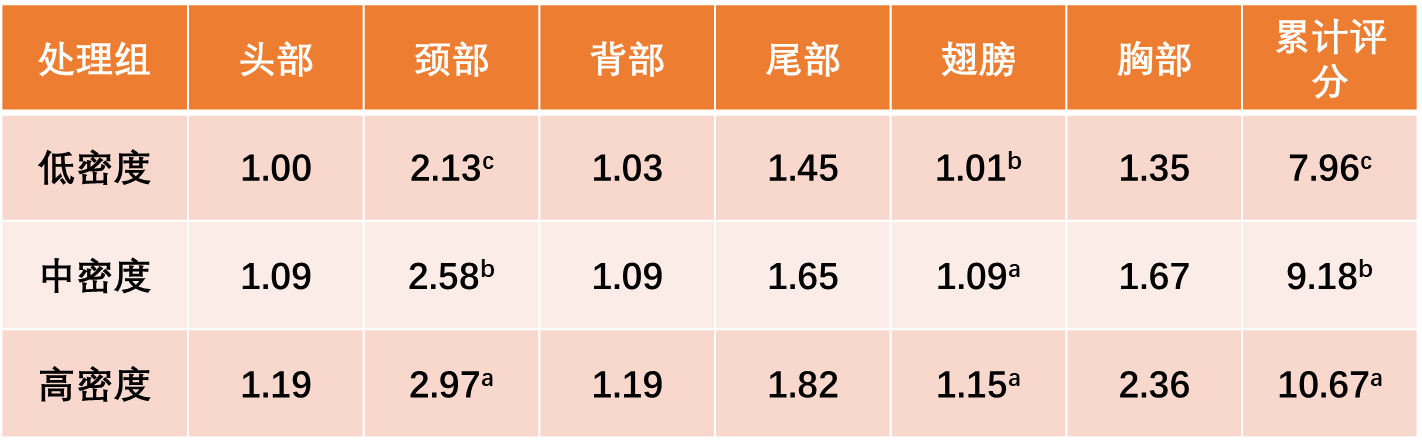
In this experiment, the feather coverage status of different parts of laying hens in different treatment groups was scored, with 1 point indicating complete feathers, 2 points indicating slight hair loss, 3 points indicating obvious hair loss, and 4 points indicating severe hair loss, I .e. the higher the score, the more serious the hair loss. As can be seen from the table below, increasing the feeding density significantly increased the degree of hair loss in the neck and wing parts of the laying hens, and significantly increased the overall hair loss of the laying hens.
Conclusion
From the results of these two experiments, it can be seen that reducing the feeding density is conducive to improving the laying rate of laying hens, reducing the feed-egg ratio of laying hens, improving the quality of eggs, and reducing the degree of hair loss of laying hens.
Original link:
https://doi.org/10.1016/j.japr. 2023.100375 (Test 1)
https://doi.org/10.1007/s11250-021-02765-5 (Test 2)
More content
A
A
A
A
A
ANCHEE GROUP
TelPhone: 86-531-88771588
Fax: 86-531-88771898
E-mail: ac@anchee.com
Office address: Floor 25, Building 5, Lushang Guoao City, Lixia District, Jinan City, Shandong Province