

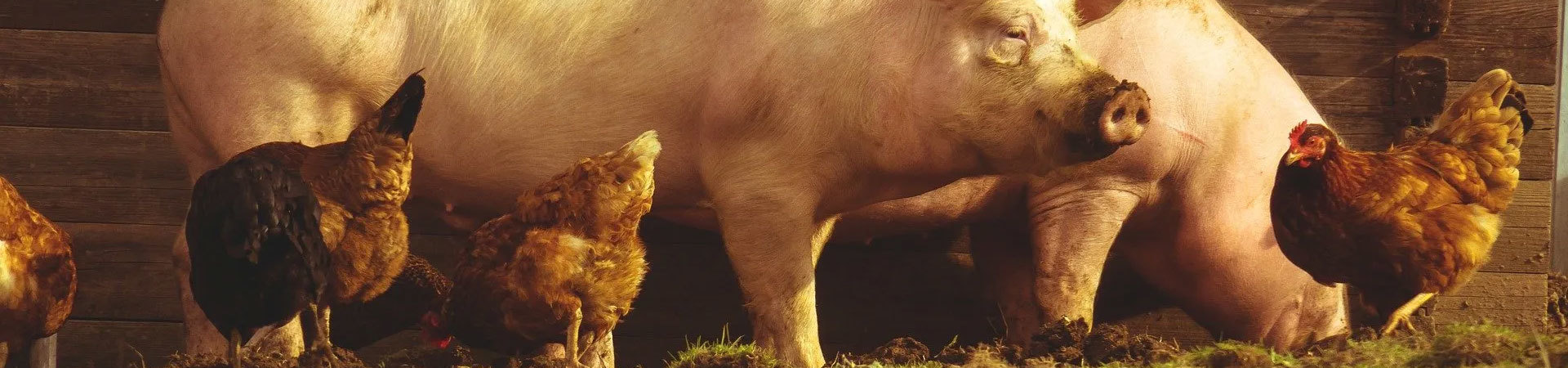
Feeding and management of fattening pigs in summer? You have to know these points!
Release time:
Aug 15,2018
The summer climate is extremely hot, the pig is warm-blooded animal, subcutaneous fat thick, sweat glands underdeveloped. Therefore, in order to resist heat, pigs are easy to lose fat, grow slowly, and even die of heatstroke. Therefore, raising pigs in midsummer must strengthen heatstroke prevention and cooling to ensure the safety of pigs over the summer. In addition, the high temperature and humidity environment in summer is more conducive to the breeding and reproduction of various pathogenic microorganisms and transmitted diseases and insects, which increases the infection of pigs in the farm. probability. What do you need to pay attention to when raising pigs in summer? What can be done to make pigs pass the hot summer smoothly and avoid the occurrence of diseases?
1. heatstroke prevention and cooling of piggery
Put a shed to shade. Before the high temperature comes, build a temporary shade net in front of the house to shade and prevent direct sunlight. Or plant vine plants such as loofah, bergamot and gourd, and climb the roof of pigsty. On the one hand, green vegetation blocks the scorching sun from directly exposing the roof and roof to cool down. On the other hand, grapes and loofah can also be obtained, killing two birds with one stone. Air coolers and electric fans can be installed in the enclosure, and fans can also be installed in pig farms with conditions. The cooling effect will be better.
2. Appropriately reduce the feeding density of fattening pigs
In order to facilitate the heat dissipation of pigs, the feeding density of fattening pigs can be appropriately reduced, and the area occupied by each pig is 1.2 to 1.5 square meters.
3, pay attention to feed nutrition
In summer, fattening pigs should be fed with more digestible feeds such as green and juicy feed rich in vitamins and minerals and wheat bran rich in laxative properties, so as to reduce the calories consumed by the metabolism of pigs. In addition, the addition of VC and other anti-heat stress drugs in the diet can effectively enhance the resistance of pigs, reduce the impact of high temperature on fat pigs, ensure the feed intake of pigs and increase the growth rate. In midsummer, the energy feed in the diet should be relatively reduced and the green feed should be increased. At ordinary times, the energy feed is 50%-70%, and in summer it is 40%-50%. Green feed increased from 0.5-1kg to 1-1.5kg. Feed should be fresh health without mildew.
Search Pig Net
4. Adjust the feeding time
Feed pigs early and at night to avoid the highest temperature period. Can reduce pig activities; It can be fed from 5: 00 a.m. to 7: 00 a.m. and after 16: 00 p.m. because the temperature is relatively low, the feed intake of pigs can be guaranteed. During the day, 0.5% saline and green juicy feed can be fed once at 10: 00 a.m. and 2: 00 p.m. respectively. Sufficient supply of clean drinking water and sufficient drinking water, the body temperature will not rise under the regulation of water. In summer, the daily drinking water of pigs is 238 of their own, and 0.5 of salt water can be drunk to regulate the body temperature.
5, keep the feed fresh
Summer high temperature and high humidity climate, feed easy mildew and oxidation, not only affect the palatability of feed, but also easily lead to pig poisoning. Therefore, it is necessary to keep the pig feed fresh in summer as much as possible, and feed the pigs freely once a day to prevent mildew and oxidation. The corners of the barrel and trough shall be cleaned regularly.
6, eliminate mosquitoes and flies.
Mosquitoes and flies are the vectors of many infectious diseases, such as highly pathogenic porcine blue ear disease, eperythrozoonosis, porcine encephalitis, porcine toxoplasmosis, circovirus disease, scabies, salmonellosis, swine dysentery, infectious gastroenteritis, pseudorabies, ascariasis, brucellosis, classical swine fever, etc., so pay attention to repelling. Special insecticides can be purchased. Doors and windows to install mosquito and fly-proof gauze, etc. Mosquito control can be carried out by drying and cutting castor leaves in the shade, and smoking can be carried out with 25 grams per cubic meter of space. Fly control can use efficient and safe drugs specially used for pig farms to spray ring walls, roofs and other places where mosquitoes and flies operate.
Reduction of other stresses and herd management
1, minimize all kinds of stress on pigs, such as rough treatment of pigs, frequent mixing, feeding time confusion, sudden changes in feed, personnel, environment, etc.
2, vaccine immunization work as far as possible in the morning of cool weather.
3. Strengthen the search for hurdles, especially during the high temperature period from noon to 3 pm, pigs are easy to fight in hot weather, and check in time when you hear the cry. Heat stress pigs should be promptly isolated to a cool place, can take ear tip bloodletting, cold water, blowing fan, camphor injection and other measures of emergency treatment.
In short, high temperature and humidity in summer, if the feeding environment is not good, it will lead to a decline in pig body resistance, and it is easy to be attacked by pathogens. Therefore, the summer pig feeding management should be strengthened, reasonable with the diet, improve the pig feeding environment. Pay attention to heatstroke prevention and cooling, clean the environment, regularly disinfect environmental appliances, and repel mosquitoes and flies and body surface parasites.
Previous article
More content
A
This 2026 authoritative guide from ANCHEE GROUP breaks down the core framework of accurate nutrition for eggs and poultry, citing latest industry research and real farm case data. It covers stage-specific nutrient formulas, cost optimization tips, common misconceptions and practical implementation steps to help poultry farmers and feed producers maximize return on investment without compromising egg quality.
A
This full guide built on ANCHEE GROUP’s 15+ years of poultry nutrition solution expertise (serving over 3,200 farms across 28 countries) breaks down all core rules of accurate nutrition for eggs and poultry, integrating 2026 latest field test data, peer-reviewed agricultural research, and real farm case insights. It delivers actionable workflows, reference tables and Q&A to help producers cut feeding cost and improve overall output efficiency.
A
This guide breaks down accurate nutrition for eggs and poultry combining ANCHEE GROUP’s 14 years of hands-on poultry farming experience, latest 2026 research and field test results. It covers stage-specific nutrient standards, error correction tactics, ROI calculation and targeted solutions for small family farms and large commercial breeding operations.
A
This 2026 guide from ANCHEE GROUP (en.anchee.com) covers all core dimensions of accurate nutrition for eggs and poultry, including stage-specific nutrient requirements, common feed formulation pitfalls, test-verified performance data, and actionable operational steps. It integrates latest industry research and 1000+ real farm case data to help poultry farmers and feed formulators maximize egg output and animal health without unnecessary extra cost.
A
This 2026 practical guide based on ANCHEE GROUP’s 12+ years of poultry farm operation experience breaks down core rules of accurate nutrition for eggs and poultry. It covers stage-specific nutrient demands, common formulation mistakes, and step-by-step implementation tips to help farms raise production efficiency by 27% on average per our 2026 field tracking data.
ANCHEE GROUP
TelPhone: 86-531-88771588
Fax: 86-531-88771898
E-mail: ac@anchee.com
Office address: Floor 25, Building 5, Lushang Guoao City, Lixia District, Jinan City, Shandong Province